
Last updated September 20, 2026
Full 25-point door and opener safety check with every visit - springs, cables, rollers, tracks, and your LiftMaster or Chamberlain opener included
You get a price before we start. It does not change when the truck arrives.
 Before
 After
After Before
 After
After Before
 After
AfterGarage Door Permits, Codes & Inspections in FL: What You Need to Know
A garage door installed without a permit in Palm Beach County is not merely a code violation. It is a documented material misrepresentation on a homeowner’s insurance policy, a fact most insurers invoke only after a wind-loss claim has already been filed. That distinction rarely matters until a storm season like 2024’s, when adjusters start looking hard at every opening in a home’s wind envelope. This guide walks through the layered permission structure in Florida, from the state building code down to the county and city level, with the specific inspection stages and product approval checks that determine whether a door actually passes.
Quick Answer
Most garage door replacements and all new installations in Florida require a permit, and in Palm Beach County, that trigger applies to doors exceeding 200 square feet or any door requiring structural modification to the opening. The permit process involves a product approval check against the state’s FL number database, a rough-in inspection, and a final inspection. Skipping it creates a recoverable depreciation gap on your homeowner’s policy and an open code violation that shows up on property disclosure searches when you sell.
Table of Contents
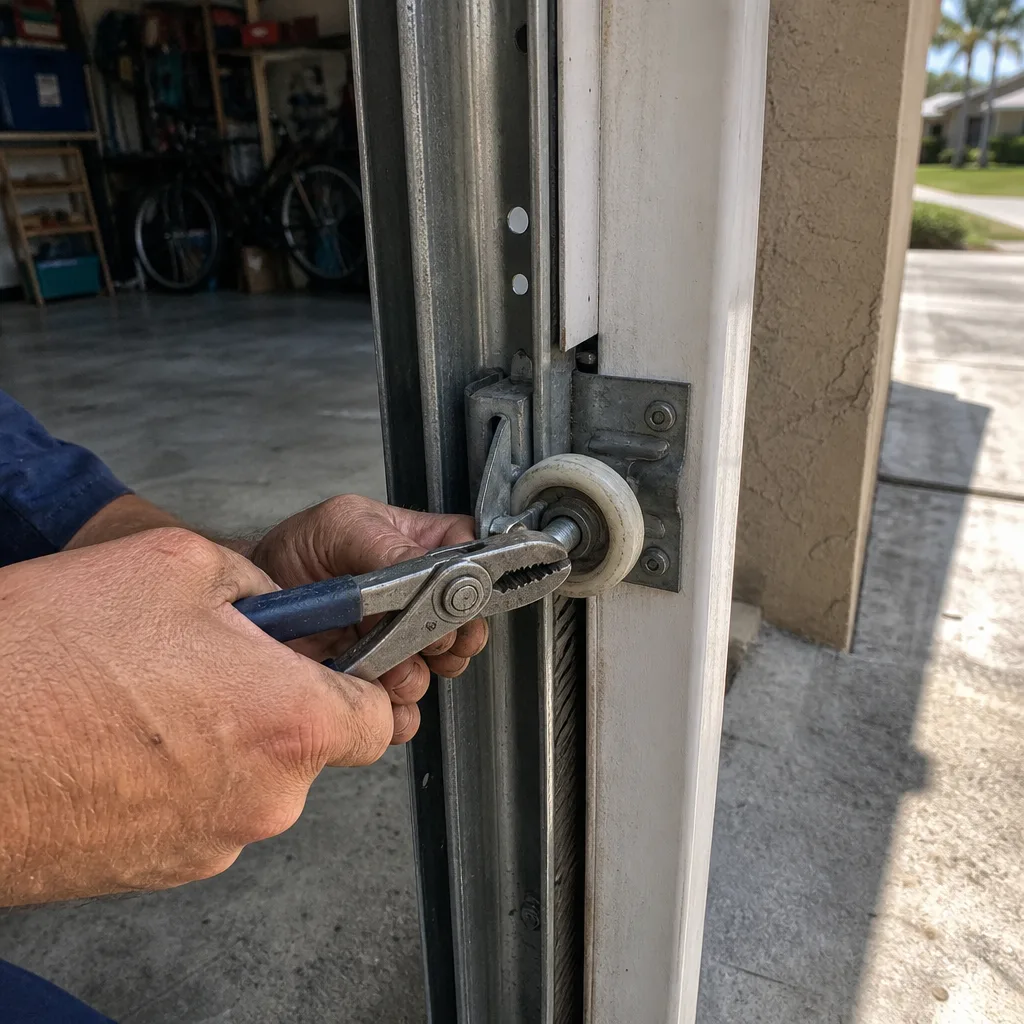
- When a Permit Is Legally Required vs. Optional in Palm Beach County
- Florida Building Code Section 1609: Wind Load and the 2023 FBC 8th Edition Changes
- The FL Product Approval Lookup: Verifying a Door Before Installation
- The Inspection Stages Palm Beach County Requires (and Which Gets Skipped)
- What a Failed Final Inspection Means for Your Title
- What a Garage Door Permit Costs in West Palm Beach and Palm Beach County
- DIY vs. Licensed Contractor: Who Can Pull the Permit
- Common Mistakes to Avoid
- When to Call a Professional
- Frequently Asked Questions
- The Bottom Line
BeforeAfterWhen a Permit Is Legally Required vs. Optional in Palm Beach County
A garage door permit in Florida is triggered by two distinct conditions, and they matter more than most homeowners realize. The first is new construction: any door installed in an opening that did not previously exist requires a permit, full stop. The second is replacement, and here the square-footage distinction applies. A residential garage door replacement in Palm Beach County requires a permit when the door exceeds 200 square feet in area (measured as width times height), when the opening is being enlarged or structurally modified, or when the door is part of a wind-borne debris region requirement that triggers a design pressure review. A standard 16-by-7-foot door measures 112 square feet, so it often falls below the size threshold when it is a direct, like-for-like replacement with no structural changes to the jamb or header.
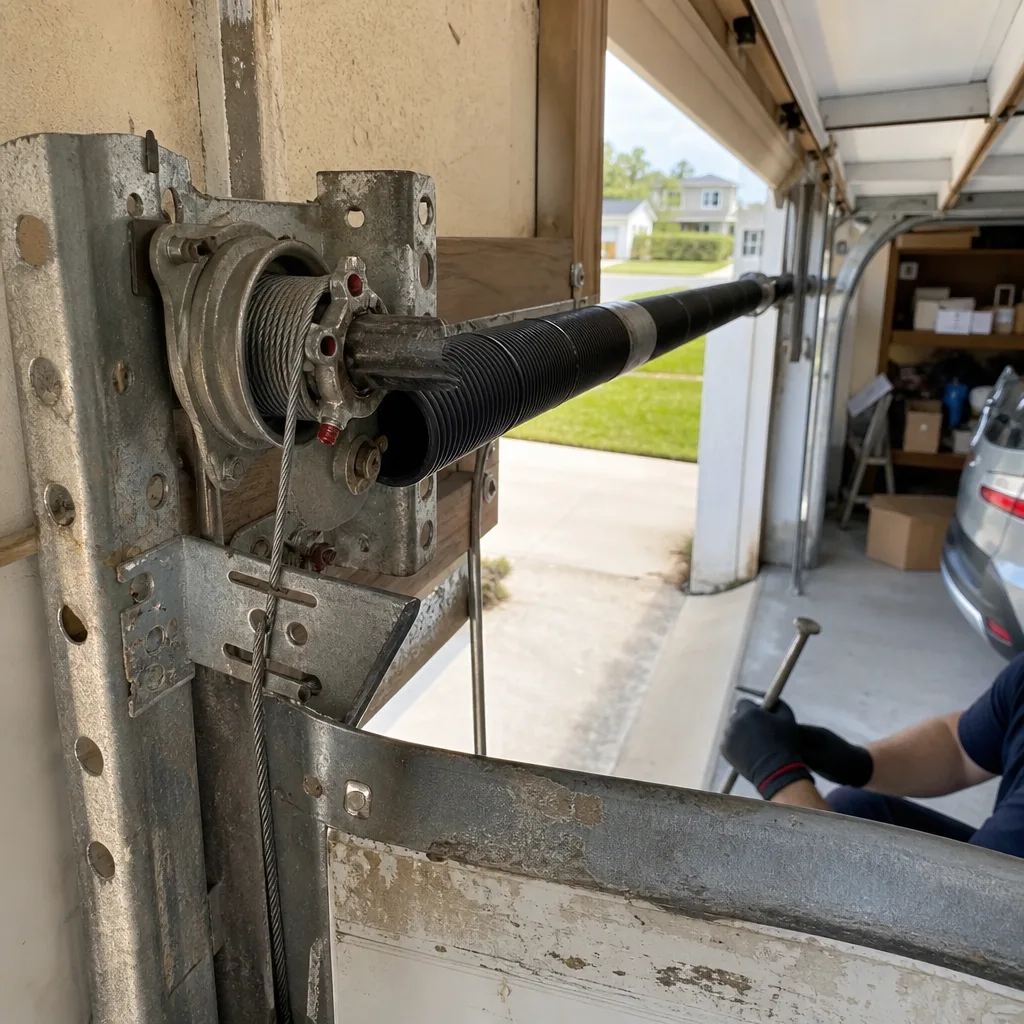
Repairs occupy a different category. Replacing a single panel, changing rollers, or swapping a broken torsion spring does not require a permit because these are repairs to existing components, not alterations to the building envelope. For help spotting issues before they become major problems, see our Garage Door Warning Signs: A West Palm Beach Homeowner’s Reference Guide. The distinction the building department draws is whether the work touches the structural opening or the wind-load path. In West Palm Beach, where the city falls within the High Velocity Hurricane Zone (HVHZ) for Miami-Dade and Broward, but under the standard wind speed maps for Palm Beach County, a door replacement that changes the product’s design pressure rating or the anchoring method crosses from repair into alteration, and that is where the permit obligation attaches.
We see this confusion regularly in older West Palm Beach neighborhoods like Flamingo Park and El Cid, where homes built before 1994 often have original wood doors that do not meet current wind-load standards. Replacing one of those doors with a modern, code-compliant unit is not a repair, even if the opening size stays identical, because the anchoring system and the door’s pressure rating change materially. A homeowner who treats that as a no-permit swap discovers the problem only when the insurance carrier asks for the permit after a wind event, or when a buyer’s inspector flags the door during a pre-purchase review.
Florida Building Code Section 1609: Wind Load and the 2023 FBC 8th Edition Changes
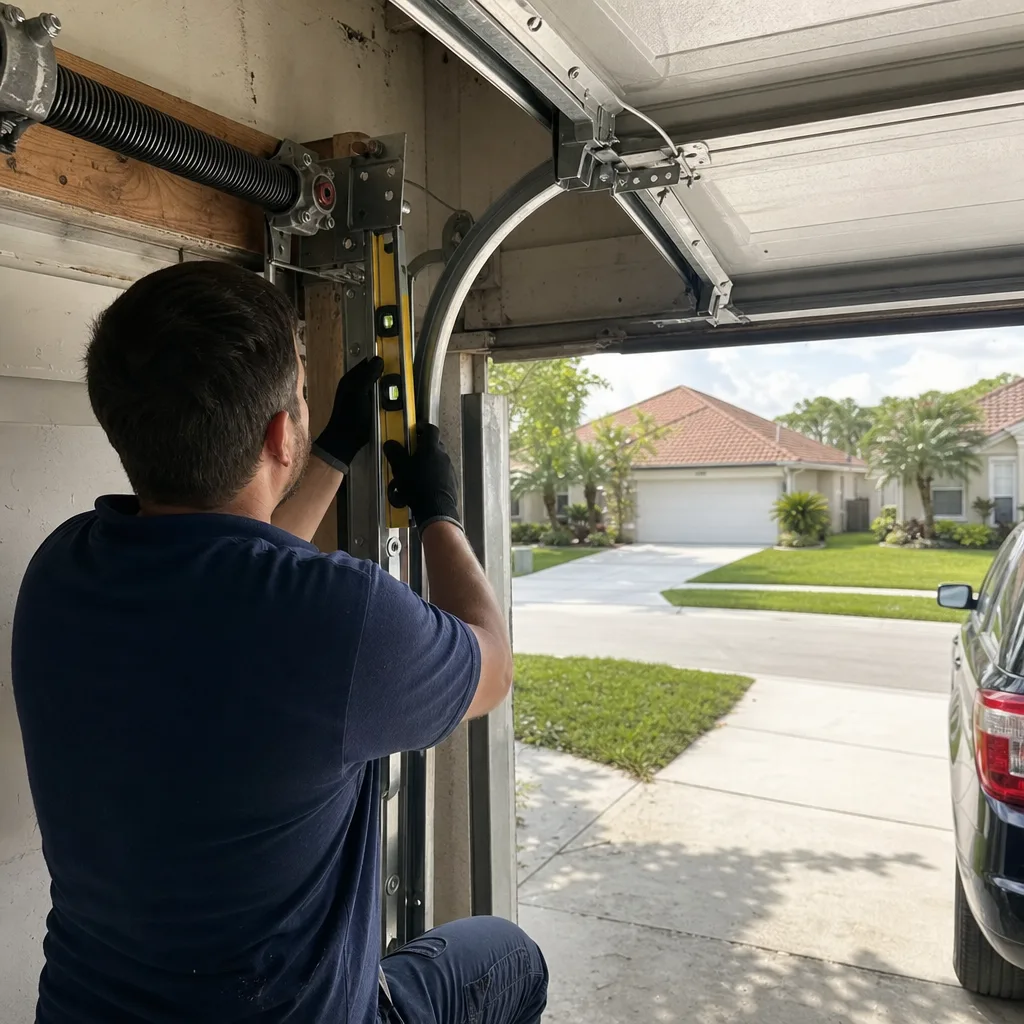
Florida Building Code Section 1609 governs structural design for wind loads, and for garage doors, the operative provisions are the design pressure requirements tied to the door’s location on the wind speed map. Palm Beach County sits in a design wind speed zone of 170 mph to 180 mph depending on the exact parcel, which places garage doors in a high-pressure classification. The door’s label must show a design pressure rating that meets or exceeds the requirement for the exposure category of the specific house, not just the county average.
The 2023 FBC 8th Edition, which took effect December 31, 2023, and applies to permits applied for after January 1, 2024, made a change that catches many replacement doors. The updated code requires large missile impact-rated assemblies for any door in a wind-borne debris region when the building is within one mile of the coast or when the basic wind speed is 140 mph or greater. Most of West Palm Beach east of I-95 falls within this designation. That means a door that passed inspection in 2018 under the 7th Edition may not meet the 8th Edition’s impact requirements if it is replaced today, even if the old door was never damaged.
We have replaced doors in South End and Grandview Heights where the existing door carried a 2016 product approval and a design pressure of +35/-40 psf, which met the code at the time but falls short of current requirements for the parcel’s exposure category. The homeowner’s assumption was that a like-for-like swap would sail through. It did not, because the product approval had expired and the anchor spacing no longer matched the 2024 calc. That is the operational meaning of the 8th Edition change: the door you are replacing may not be the door you are allowed to reinstall.
The FL Product Approval Lookup: Verifying a Door Before Installation
Every garage door installed in Florida must carry a Florida product approval number, commonly called an FL number, issued by the Florida Department of Business and Professional Regulation. The FL number certifies that the specific door model, with its specific anchoring system, has been tested to meet the wind-load requirements of the Florida Building Code for the door’s approved design pressure range. Installing a door without a current FL number is a code violation even if the physical door appears identical to an approved model.
The lookup process is public and should be done before the door arrives, not after the final inspection fails. The state maintains the Florida Product Approval database online at the DBPR’s building code information system. You search by manufacturer name, FL number, or product category. Each approval entry lists the approved models, the design pressure ratings, the approved anchoring methods, and the expiration date. A door with an expired FL number is not an approved product, regardless of what the manufacturer’s brochure claims.
Here is the verification sequence we follow on every installation in West Palm Beach:
- Confirm the FL number is printed on the door’s permanent label or provided on the submittal package from the distributor. The number typically follows a format like FL12345.1.
- Search the DBPR database using the FL number to confirm the approval is active and lists the exact door model and size being installed.
- Check the design pressure (DP) rating on the approval against the wind-load calculation for the specific address. A door approved for DP 35 may fail a parcel requiring DP 50.
- Verify the anchoring method listed on the approval matches what the installer will actually use. Wood jamb anchors differ from masonry anchors, and the approval is specific to each.
- Print or save the approval page as part of the permit package. The building department will ask for it during plan review, and the homeowner should retain it with the closing documents.
A contractor who cannot produce an FL number for the door they are quoting is either selling leftover inventory that predates the current code cycle or has not verified the product for your address. If you’re unsure how to evaluate a contractor, read our How to Hire a Garage Door Contractor in West Palm Beach: A Step-by-Step Guide. Neither should be acceptable. We work with Amarr, Wayne Dalton, and Raynor doors on West Palm Beach installations, and each manufacturer publishes its current FL approvals. When we quote a door, the approval page accompanies the written price, because Clause 1 of The Haven Standard means the scope is documented before work starts. Clause 4 is why the technician photographs the failed part before quoting a replacement, and the same logic applies here: show the paper before you sign anything.
The Inspection Stages Palm Beach County Requires (and Which Gets Skipped)
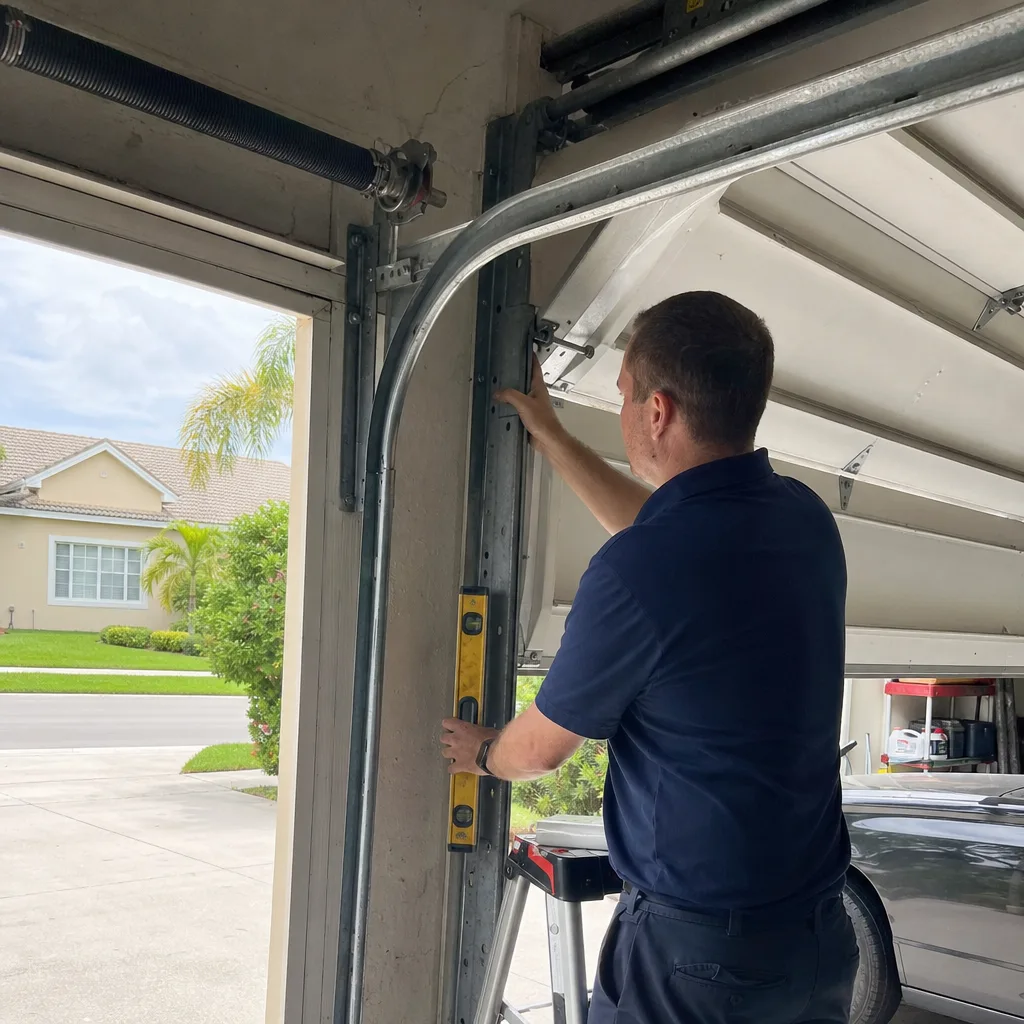
Palm Beach County requires two inspection stages for garage door permits: a rough-in inspection and a final inspection. Both are scheduled through the county’s online permitting portal, and both must be completed before the permit is closed. The rough-in inspection occurs after the door’s framing and anchoring system are installed but before the door panels, tracks, and hardware are fully assembled or before insulation and trim conceal the anchoring. The inspector verifies that the anchors match the approved anchoring schedule, that the jamb and header are structurally sound and properly sized, and that the wind-load path from the door to the building frame is continuous.
The final inspection occurs after the door is fully installed, operating, and balanced. The inspector confirms the door’s permanent label is visible, the design pressure rating on the label matches the approved plans, the door operates under the required closing force, and the safety reverse system functions. In Palm Beach County, the final inspection also verifies that the door meets the opening protection requirements for the structure’s exposure category.
The stage most contractors skip, or schedule too early to be meaningful, is the rough-in. Many installers complete the entire door installation in one day and schedule only the final inspection, gambling that the inspector will not ask to see the anchors behind the trim. Occasionally that gamble pays off. When it does not, the inspector red-tags the job, the anchors must be exposed by removing finished work, and the homeowner receives a correction notice that remains on the permit record until cleared. In our experience on West Palm Beach jobs, the rough-in inspection is where anchor spacing, embedment depth, and jamb condition are actually verified. For a complete overview of what to check, see our Garage Door Repair Maintenance Checklist for West Palm Beach Homeowners. Skipping it saves the contractor half a day and creates liability for the homeowner that persists for years.
The city of West Palm Beach operates its own building department and issues permits based on the county’s code but with city-level review procedures. The inspection stages are the same two stages, but the city inspector enforces its own administrative interpretations, particularly around historic districts like El Cid and Northwood, where additional design review may apply to the door’s appearance. A door approved by the county is not automatically approved by the city’s historic preservation board.
What a Failed Final Inspection Means for Your Title
An open permit or a failed inspection is a public record. It does not disappear when the contractor leaves the driveway or when the homeowner pays a fine. In Palm Beach County, open violations and unpermitted work appear in the county’s property records and are flagged during title searches and disclosure reviews when the home is sold. A garage door installed without a permit, or with a permit that never received a final inspection, shows up as an open violation that must be resolved before closing, at the seller’s expense.
The Florida residential property disclosure form asks the seller to disclose known defects and unpermitted work. A homeowner who did not pull a permit for a garage door replacement that required one must either disclose it, which typically means the buyer demands the door be permitted retroactively before closing, or fail to disclose it, which creates post-sale liability if the buyer discovers the violation. The title company’s search will find the open permit in any case, because the county’s permit database is tied to the property parcel.
We have seen closings stall in West Palm Beach because a garage door replacement five years earlier never received a final inspection. The seller had to open a new permit, schedule the inspections, correct whatever the inspector flagged (which in one case required re-anchoring the entire door to meet current code rather than the code in effect at installation), and pay penalty fees before the title company would clear the property. The total cost exceeded the original door installation by a factor of two, which is the actual price of skipping the permit process.
What a Garage Door Permit Costs in West Palm Beach and Palm Beach County
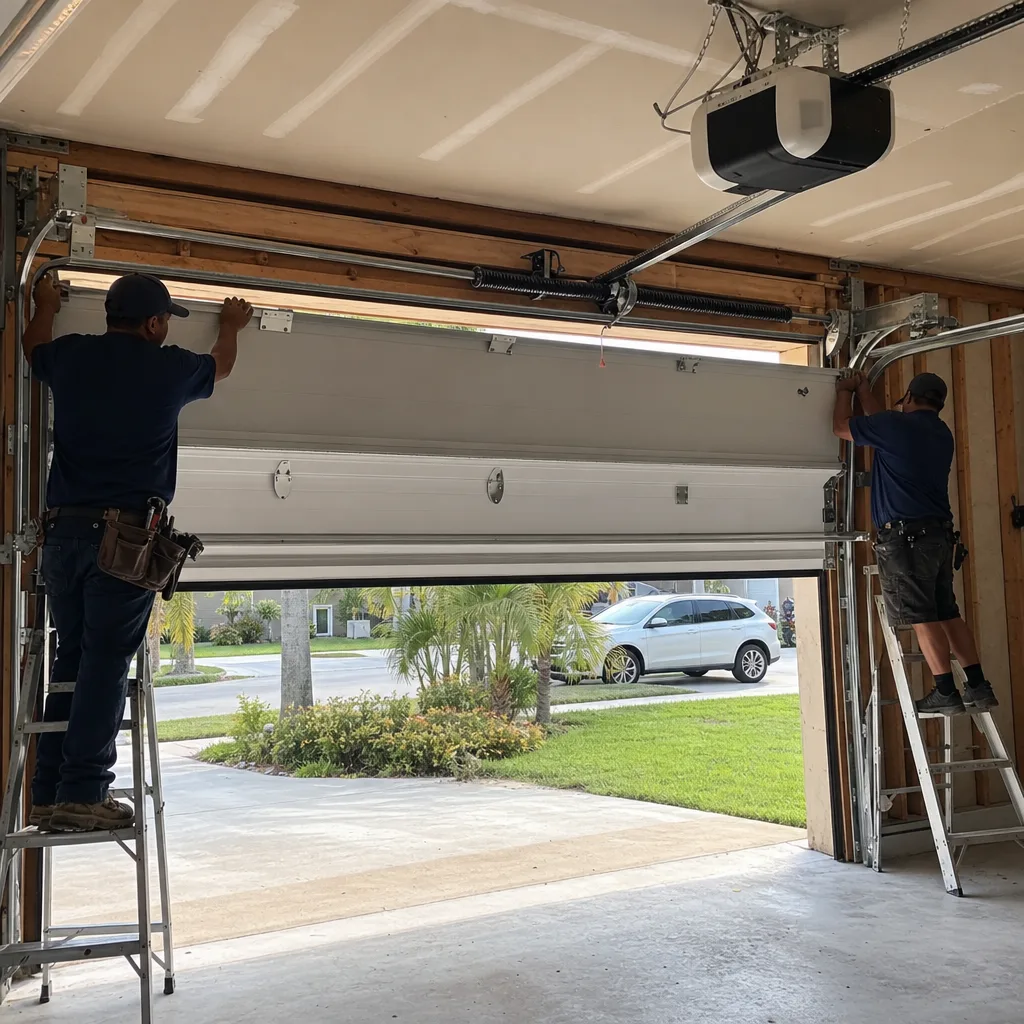
A garage door permit in West Palm Beach typically costs between $85 and $250 depending on the door’s size, value, and whether plan review is required. Palm Beach County’s fee schedule applies to unincorporated areas and ranges from roughly $75 to $300 for residential garage door work, with additional fees for expedited review or re-inspection. The permit fee is a small percentage of the overall installation cost, which for most residential garage door replacements in West Palm Beach runs between $1,100 and $3,400 depending on the door material, insulation level, wind rating, and brand.
Here is the approximate breakdown for a standard 16-by-7-foot replacement door in West Palm Beach:
- Permit application and issuance: $85 to $150
- Plan review (if required): $50 to $100
- Rough-in inspection: included in permit fee
- Final inspection: included in permit fee, but re-inspection after a failure costs $50 to $100 per visit
- Product approval research: no fee, public database
- Wind-load calculation (for complex parcels): $75 to $150 if a third-party engineer is needed
Permit fees are not where homeowners lose money. The financial damage comes from penalties for unpermitted work, which in Palm Beach County can be assessed at double the permit fee plus additional charges for after-the-fact review, and from retrofit costs when a door installed without a permit fails a later inspection because the anchoring method was never verified. The permit fee is the cheapest line item in a garage door replacement. The Garage Door Installation in West Palm Beach process should include the permit cost as a line item on the written scope, not as a surprise at the end.
DIY vs. Licensed Contractor: Who Can Pull the Permit
A homeowner may pull a garage door permit in Florida as an owner-builder, provided the home is their primary residence and they intend to perform the work themselves. The owner-builder exemption allows a homeowner to act as the contractor of record, but it carries obligations many homeowners do not understand. The owner signs an affidavit stating they are performing the work and will be responsible for it, which means they are also liable for code compliance, worker injuries, and any defect that later causes property damage or injury. If the homeowner pulls the permit but hires an unlicensed worker to perform the installation, the permit is invalid, and the owner-builder affidavit constitutes a false statement punishable as a misdemeanor.
A licensed contractor pulls permits on behalf of the homeowner, and in Florida, garage door installation contractors are required to hold either a specialty license or a general contractor’s license, depending on the scope. The license number appears on the permit application and on the contractor’s invoices. A homeowner who asks for the license number and verifies it on the DBPR’s license lookup page can confirm the contractor is active, insured, and not carrying unresolved complaints. We keep our license number on the page, not buried in fine print, because the customer who checks licenses is the customer who should check.
The practical distinction in West Palm Beach is this: when a licensed contractor pulls the permit, the contractor is responsible for scheduling inspections, correcting deficiencies, and closing the permit. When a homeowner pulls the permit as owner-builder, the homeowner is responsible for all of that, including knowing what the inspector will be looking for. Most homeowners do not know what a rough-in inspection verifies, which is precisely the knowledge the contractor is paid to provide.
Common Mistakes to Avoid
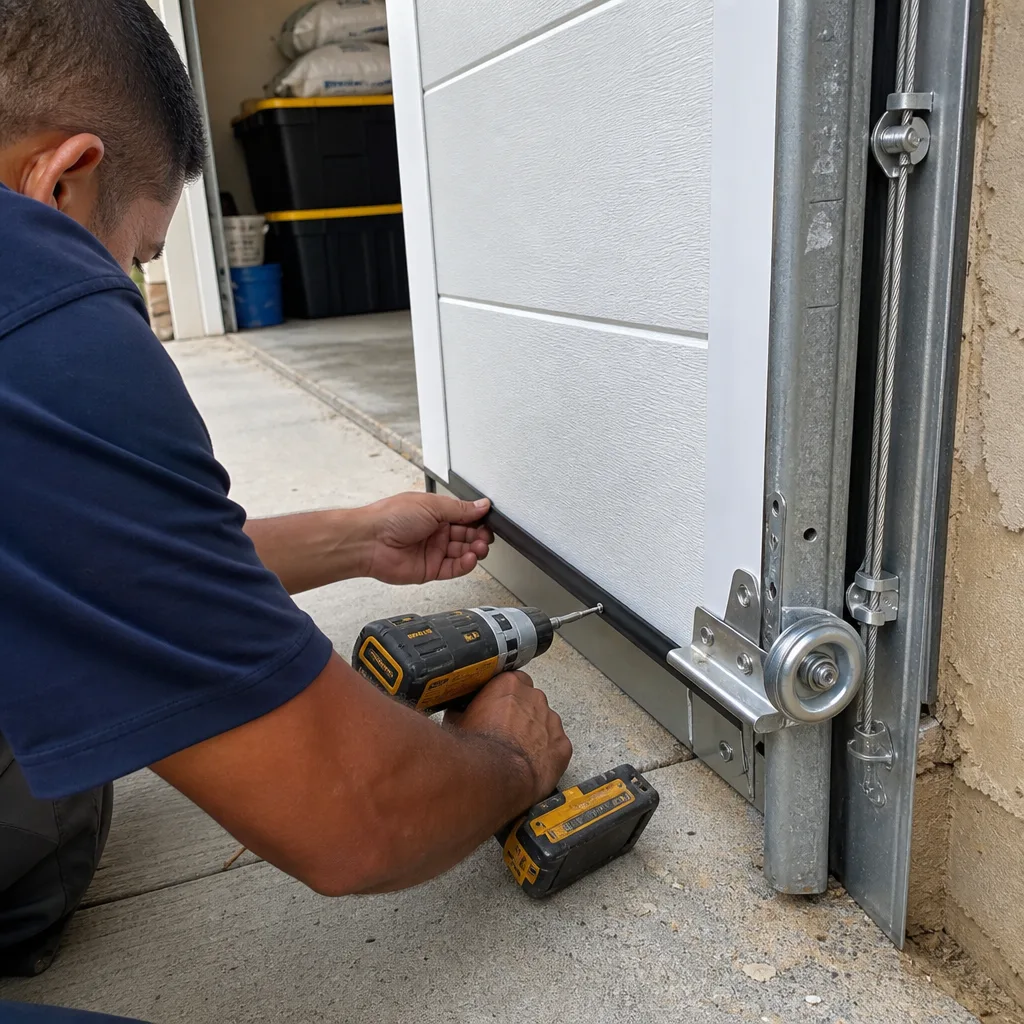
- Treating a like-for-like replacement as automatically permit-exempt. The square-footage threshold is only one factor in Palm Beach County. A door replacement that changes the anchoring system, design pressure rating, or product approval triggers the permit requirement even at 112 square feet.
- Assuming the contractor pulled the permit when they did not. The permit record is public. Verify it on the county’s online permitting portal before installation day. A verbal assurance is not a permit.
- Accepting a door without checking the FL number. An expired or mismatched product approval means the door is not code-compliant, and the final inspection will fail if the inspector checks, which in Palm Beach County they do.
- Allowing the rough-in inspection to be skipped. Once trim and insulation cover the anchors, verifying the anchoring schedule requires destructive access. The rough-in inspection is the only opportunity to confirm the anchors before they disappear behind finish work.
- Installing a door in a historic district without city-level design review. The county permit does not override the City of West Palm Beach’s historic preservation requirements in districts like El Cid or Northwood. Skipping the design review creates a stop-work order and a violation notice.
- Not retaining the closed permit and approval documents. The closed permit, the product approval page, and the final inspection record belong in the same file as the homeowner’s insurance policy. When a wind-loss claim is filed, the adjuster will ask for them.
- Believing a permit is optional because a neighbor skipped one. The neighbor’s unpermitted door is an open violation waiting to surface in a sale or a claim. Code enforcement in West Palm Beach responds to complaints, and unpermitted work is one of the most commonly reported violations.
When to Call a Professional
The permitting process is not where a homeowner should improvise. If the door requires a permit because of size, structural modification, or wind-load classification, the installation requires a contractor who understands the inspection stages and the product approval system. If you are replacing a door in a home east of I-95 in West Palm Beach, the large missile impact requirements and the anchor specifications are decisions that a code inspector will verify against the permit plans, not judgment calls you want to learn about during a failed inspection. For more guides & resources on garage door permitting and compliance, visit our blog.
Servo Garage Doors West Palm Beach offers free estimates in West Palm Beach, and every quote includes a written price and written scope before any work starts, per Clause 1 of The Haven Standard. Call (561) 489-7509. We pull the permit, schedule both inspections, and deliver the photo record with the closed permit, because Clause 4 means you see what was done and what it took to get there.
Frequently Asked Questions
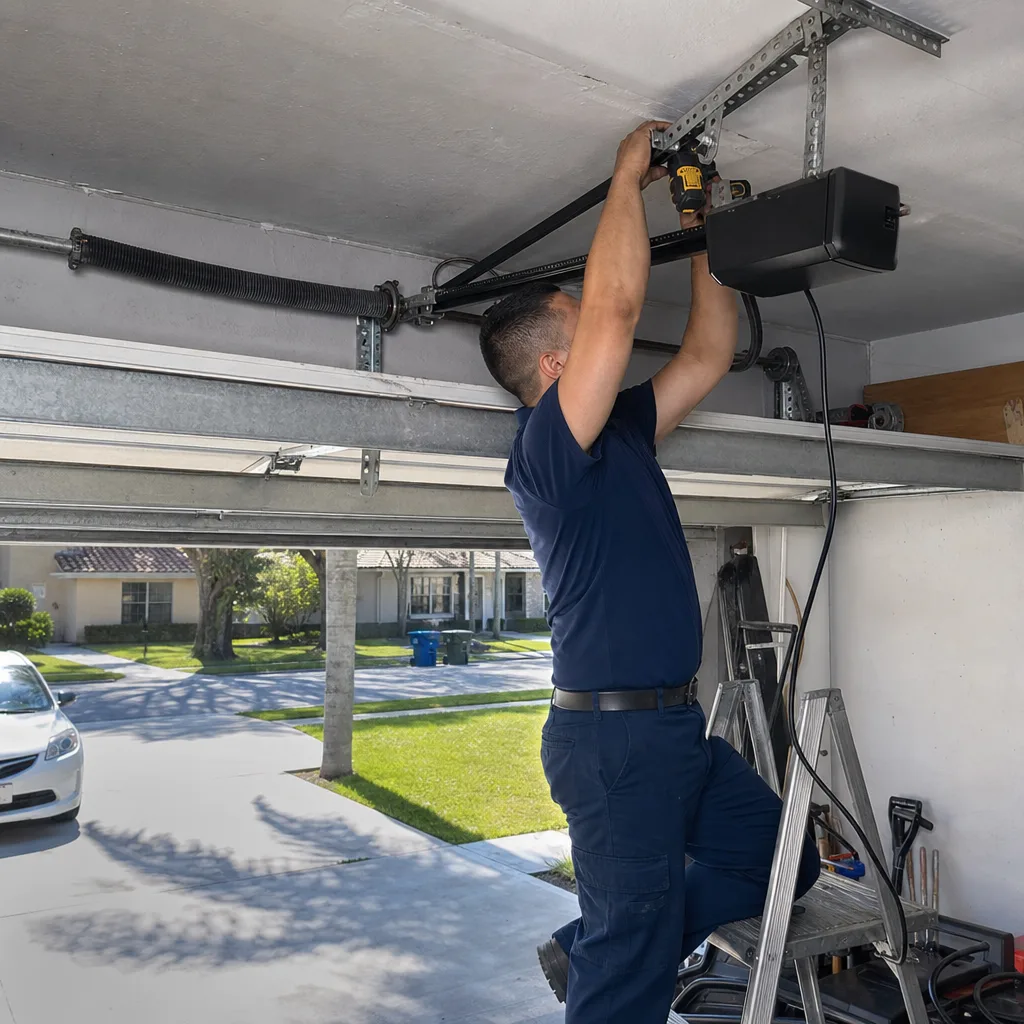
Yes, in most cases. Florida Building Code requires a permit for any new garage door installation and for replacements that exceed 200 square feet, involve structural modification to the opening, or change the door’s design pressure or anchoring system. Simple like-for-like replacements of standard-size doors often fall below the threshold, but wind-load requirements in West Palm Beach mean the practical answer is to check with the building department or have a licensed contractor verify the requirement for your address. Call (561) 489-7509 for a definitive answer on your specific door.
Expect to pay between $75 and $300 for the permit itself, depending on the door’s value and whether plan review is required. West Palm Beach city permits run $85 to $250. Re-inspection fees after a failed inspection add $50 to $100 per visit. The permit fee is a minor component of a garage door replacement that typically totals $1,100 to $3,400.
The work becomes an open code violation on your property record. It surfaces during title searches and insurance claims, especially after a wind event when the adjuster asks for the permit. Resolving it later requires opening a permit retroactively, paying penalty fees, and potentially retrofitting the door to meet current code, which in West Palm Beach may mean re-anchoring the entire assembly.
Yes. A garage door is part of the building’s wind envelope, and Florida Building Code Section 1609 treats it as a structural component requiring a design pressure rating and product approval. In Palm Beach County’s wind speed zones, the door must be impact-rated if the home is in a wind-borne debris region, which includes most of West Palm Beach east of I-95.
Yes, as an owner-builder for a primary residence, but the homeowner then assumes responsibility for code compliance, inspections, and liability. The affidavit of owner-builder status is a legal document, and hiring an unlicensed installer under an owner-builder permit invalidates the permit and creates criminal exposure.
Plan review for a straightforward replacement typically takes 5 to 10 business days, and inspections are scheduled within 1 to 3 business days of the request. The total process from permit application to closed permit is usually 2 to 3 weeks when both inspections pass on the first attempt. Holiday and storm-season schedules can extend that timeline, and re-inspections add time and fees.
The Bottom Line
Florida’s garage door permitting system is a layered structure: the state building code sets wind-load and product-approval requirements, Palm Beach County adds the square-footage and inspection triggers, and the City of West Palm Beach operates its own review process with historic-district overlays. The homeowner who skips the permit is not just risking a fine. The open violation becomes a title defect, an insurance gap, and a disclosure liability that transfers to the next buyer. The permit is the cheapest line item in the entire installation. The Garage Door Repair in West Palm Beach and installation process should put that cost in writing up front, with the FL number and the inspection schedule documented before the first anchor goes in. When the door is done, the closed permit and the photo record go in the homeowner’s file, because the paper is the proof.
Written by Marcus Deller, Owner at Servo Garage Doors West Palm Beach, serving West Palm Beach since 2015.